Archive for the
‘Uncategorized’ Category

June 18, 2025

Leila

Uncategorized

What Is Tianeptine?

Tianeptine is a little-known antidepressant that’s gained alarming traction in the U.S. not through prescriptions, but through gas station counters. Originally developed and approved for medical use in countries like France, Tianeptine was designed to treat major depressive disorder by influencing serotonin uptake in the brain. According to Wikipedia, it’s classified as a tricyclic antidepressant, though it acts in ways different from traditional SSRIs.

In the United States, however, Tianeptine isn’t FDA-approved. That hasn’t stopped it from being sold under brand names like “Zaza” or “Tianna Red,” often in gas stations and convenience stores. These unregulated sales, combined with its opioid-like effects at high doses, have earned it the nickname “gas station heroin” a deeply misleading name for what many people think is a harmless supplement.

The Newsweek report emphasizes that misuse in the U.S. is rising fast, especially among individuals seeking relief from emotional pain, anxiety, or untreated trauma. But instead of healing, many find themselves caught in a dangerous cycle of dependence and withdrawal.


The Risks

While Tianeptine may have legitimate medical uses overseas, its unregulated sale in the U.S. creates a minefield of mental and physical health dangers.

The U.S. Food and Drug Administration (FDA) has issued multiple warnings due to reports of serious harm, including seizures, loss of consciousness, and even death. In 2022 alone, the FDA received over 130 adverse event reports related to Tianeptine, most of which were tied to products sold without a prescription. Many of these incidents stemmed from high-dose, chronic use behavior fueled by the belief that the product was a safe, natural mood enhancer.

But Tianeptine acts more like an opioid when taken in large amounts. This isn’t just a misuse issue; it’s a mental health crisis in disguise. People struggling with untreated depression, trauma, or anxiety may turn to substances like Tianeptine because they feel unseen or unsupported by the traditional system. And unfortunately, the relief it offers is short-lived and fraught with danger.


What the Withdrawal Feels Like

When someone tries to stop using Tianeptine after extended misuse, the symptoms can be both mentally and physically overwhelming. The withdrawal process is known to mirror that of opioids, though with an added layer of emotional instability.

Common withdrawal symptoms include:

  • Severe anxiety or panic

  • Depression and mood swings

  • Insomnia

  • Flu-like symptoms (chills, body aches, nausea)

  • Intense cravings

  • Feelings of unreality or detachment

At Lucent Recovery and Wellness, we’ve seen the toll this kind of unregulated substance can take on individuals who already face significant emotional challenges. For people managing dual diagnosis, a mental health condition combined with substance use, the experience of withdrawal can exacerbate both, making it even harder to find balance without support.

We do not recommend self-detoxing or going through this process alone. If you or someone you know is struggling with Tianeptine misuse or the emotional distress that led to it, contact a licensed provider immediately.


The Solution

While Tianeptine misuse may look like a substance issue on the surface, it’s often rooted in deeper emotional pain, untreated anxiety, unresolved trauma, or mental health diagnoses that have gone unsupported for years.

That’s why at Lucent Recovery and Wellness, our approach begins with compassion and continues with clinical precision. We specialize in dual diagnosis care, which means we treat both the emotional root and the behavioral pattern. Whether you’ve used Tianeptine to numb anxiety, depression, or trauma, we’re here to help you build a new way forward, one grounded in your mental well-being, not temporary fixes.

“Our mission is to help people find lasting peace, not just relief,” says Chris Hudson, Co-owner at Lucent Recovery and Wellness. “So many turn to substances like Tianeptine because they don’t know where else to go. We’re here to remind them — healing is possible, and they don’t have to walk it alone.”

You don’t have to wait until things get worse to reach out. Whether you’re feeling overwhelmed, uncertain, or just looking for someone to talk to, Lucent’s compassionate team is here. Learn more or take the first step at lucentrecovery.com.

Medically Review By Chris Hudson, LPC, LCDC

May 13, 2025

Leila

Uncategorized

Summary:
This guide helps readers decide whether outpatient mental health treatment is the right option based on symptoms, lifestyle needs, and treatment goals.

Choosing the right mental health treatment program is one of the most personal and important decisions you can make. At Lucent Recovery and Wellness, one of the most common questions we hear is: “Is outpatient treatment right for me?” The answer depends on your mental health history, current needs, and lifestyle.

This guide will walk you through how outpatient mental health treatment works, the types of programs available, who it’s best suited for, and what to expect when receiving care at Lucent in Austin, TX.

What Is Outpatient Mental Health Treatment?

Outpatient treatment is a structured and supportive option that allows you to receive mental health care—such as individual therapy, group sessions, and psychiatric support—while continuing to live at home. Unlike residential treatment, outpatient care offers flexibility and continuity in your day-to-day life.

Outpatient mental health treatment is ideal for people who:

  • Need regular therapeutic support but do not require 24/7 supervision

  • Are balancing responsibilities like work, school, or caregiving

  • Are stepping down from a higher level of care

  • Want to stay connected to their community while healing

🡒 Learn more about our mental health treatment programs in Austin, TX.

A diverse group therapy session in a bright, modern outpatient facility, showing a supportive and collaborative environment for mental health recovery.

Types of Outpatient Programs at Lucent

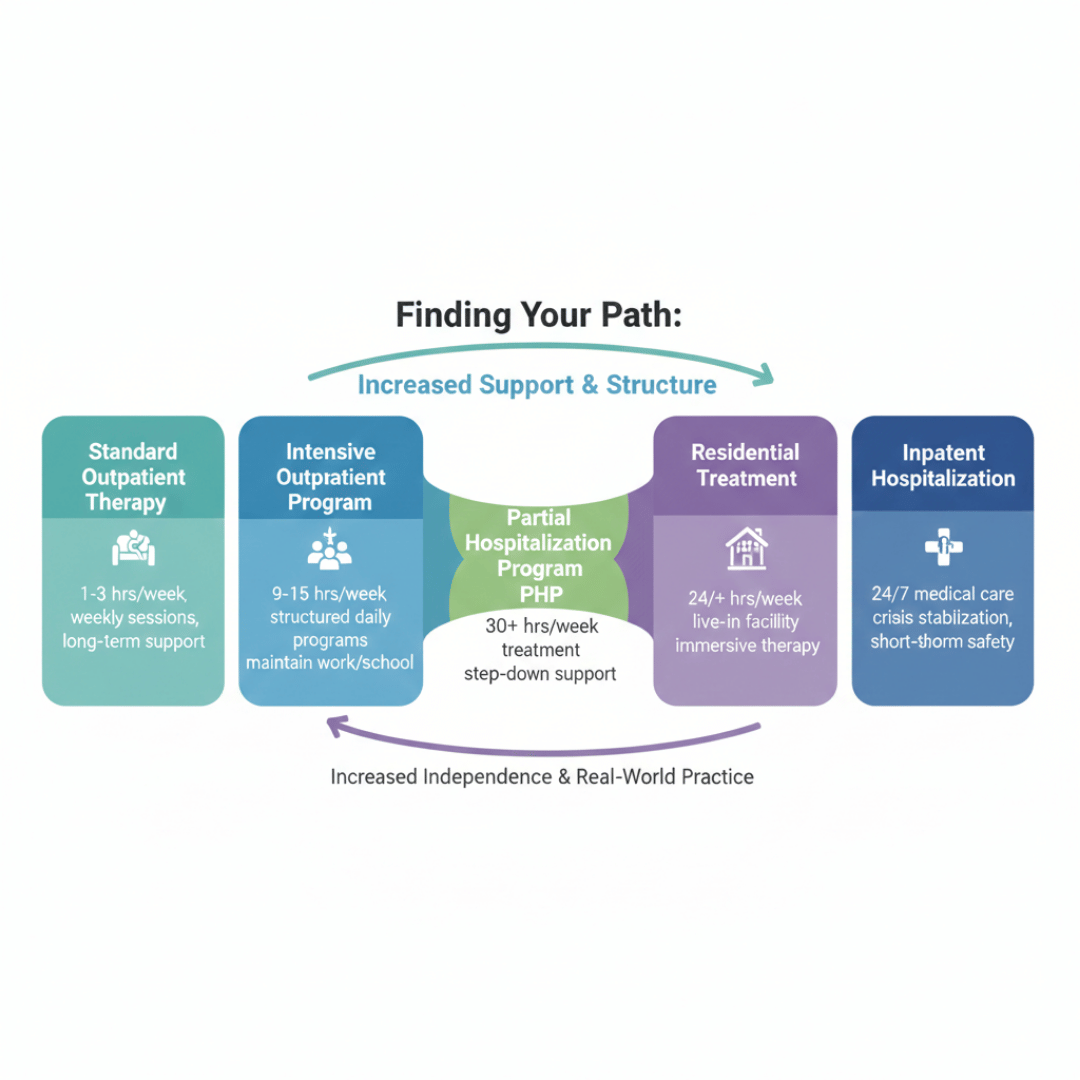
1. Partial Hospitalization Program (PHP)
PHP is the most intensive form of outpatient care, often used as a step-down from inpatient treatment or as an alternative to residential care.

Includes:

  • 5–7 days per week of programming

  • 6+ hours per day of therapy and activities

  • Daily check-ins with clinical staff

Best for: Individuals needing significant support and structure without living at a facility.

2. Intensive Outpatient Program (IOP)
IOP offers a more flexible schedule than PHP while still providing comprehensive care.

Includes:

  • 3–5 days per week

  • 3–4 hours per day

  • A mix of individual therapy, group therapy, and psychoeducation

Best for: Those with moderate mental health symptoms seeking consistency and support.


Outpatient vs. Inpatient: Key Differences


Why Outpatient Works: Healing in the Real World

One of the greatest failures of residential “rehab” is the “bubble effect”—the difficulty of transitioning from a sterile, controlled environment back to the stresses of home.

Outpatient care at Lucent Recovery utilizes “In-Vivo” practice. This means if you learn a distress tolerance skill at 2:00 PM in group therapy, you are applying it at 6:00 PM during dinner with your family or while navigating Austin traffic. This immediate application helps “wire” new coping mechanisms into your brain much faster than traditional isolated treatment.

Benefits of Outpatient Mental Health Care

  • Affordability – More cost-effective than residential programs

  • Flexibility – Ideal for those balancing daily responsibilities

  • Continued Support – Ongoing connection with therapists and peers

  • Integration – Practice coping strategies in real-life situations

  • Personalization – Custom treatment plans based on your needs


What to Expect at Lucent Recovery and Wellness

At Lucent, we combine evidence-based mental health treatment with compassion, flexibility, and a trauma-informed approach. Whether you’re dealing with anxiety, depression, PTSD, or another challenge, our programs are built to meet you where you are.

Core services include:

  • Individual therapy with licensed clinicians

  • Group therapy and peer support

  • Family counseling

  • Psychiatric evaluation and medication management

  • Life skills and case management

  • Specialized trauma-informed care

Holistic options include:

  • Yoga and mindfulness

  • Nutrition and wellness coaching

  • Art and music therapy

🡒 Meet our team and explore our therapeutic approach.


Who Is a Good Fit for Outpatient Treatment?

You may benefit from outpatient care if you:

  • Are medically and emotionally stable

  • Have a supportive home or community environment

  • Want to continue working, studying, or caring for your family

  • Are experiencing mild to moderate symptoms of anxiety, depression, PTSD, or other conditions

Outpatient care may not be suitable if you are:

  • In crisis or experiencing suicidal ideation

  • Struggling with severe, unmanaged symptoms

  • Lacking a safe or supportive environment at home

🡒 Take our self-assessment or contact us to see what level of care is right for you.

Is Outpatient Right for You? Check all that apply:

  • [ ] I have a safe, stable place to sleep at night.

  • [ ] I am not currently in an active medical or psychiatric crisis.

  • [ ] I have responsibilities (work, family, school) that I cannot put on hold.

  • [ ] I want to build a support network within the local Austin community.

  • [ ] I am ready to be an active participant in my own recovery.


Take the Next Step Toward Mental Health Recovery

Outpatient mental health treatment can provide the support, structure, and tools you need while allowing you to stay grounded in your everyday life. At Lucent Recovery and Wellness in Austin, TX, we are committed to helping you find lasting healing through personalized, trauma-informed care.

Not sure which level of care fits your life? Schedule a 15-minute ‘Right Fit’ consultation with our Austin clinical team. We’ll help you navigate the options no pressure, just clarity.

Healing and recovery at Lucent Recovery and Wellness

Reviewed by Chris Hudson, LPC, LCDC

Founder & Executive Director – Lucent Recovery and Wellness, Austin, TX (2020–Present)
Leads clinical programs and develops innovative therapeutic approaches integrating experiential and creative therapies.

Board Member – Reklaimed, Austin, TX
Supports recovery-focused nonprofit initiatives fostering community and creative skill-building.

Clinical Leadership Roles – South Meadows Recovery, Inc.
Held leadership positions overseeing program development, clinical operations, and organizational management.

EDUCATION & CREDENTIALS

  • M.A., Clinical Mental Health Counseling – Seminary of the Southwest (2021)
  • B.A., Studio Art – Lewis & Clark College (2004)
  • Licensed Professional Counselor (LPC), Texas
  • Licensed Chemical Dependency Counselor (LCDC), Texas

May 13, 2025

Leila

Uncategorized

The Hidden Link Between Trauma and Mental Health Challenges

Many people facing anxiety, depression, or other mental health challenges aren’t just overwhelmed by their current circumstances—they’re living with the unprocessed effects of trauma. At Lucent Recovery and Wellness, we see this often: individuals navigating persistent emotional distress, mood disorders, or relationship difficulties who have also experienced trauma. Whether it stems from childhood neglect, intimate partner violence, medical trauma, or witnessing a distressing event, unresolved trauma deeply affects mental health.

This post explores how trauma impacts the brain, contributes to long-term psychological challenges, and how trauma-informed mental health care can support real and lasting healing.

Understanding Trauma and Its Impact on the Brain

Trauma isn’t just a memory—it’s a physiological experience that reshapes how the brain functions. When someone undergoes a traumatic event, their nervous system becomes dysregulated. This can lead to an overproduction of stress hormones like cortisol, affecting key brain regions:

  • Hippocampus: Impairs memory and learning

  • Amygdala: Heightens fear, anxiety, and emotional reactivity

  • Prefrontal Cortex: Reduces rational decision-making and emotional regulation

As a result, people often live in a state of hypervigilance or emotional numbing, struggling with symptoms like anxiety, intrusive thoughts, low self-esteem, or chronic emotional overwhelm.


Trauma’s Role in Anxiety, Depression, and Other Conditions

The effects of trauma frequently manifest in common mental health diagnoses, including:

  • Anxiety disorders

  • Depressive disorders

  • PTSD

  • Panic attacks

  • Dissociation

  • Chronic relationship conflict

While each person’s experience is unique, unaddressed trauma can be a core driver behind ongoing emotional distress. Without targeted trauma-informed care, traditional talk therapy or medication alone may only offer partial relief.


Why Traditional Mental Health Support May Fall Short

Many outpatient mental health services focus on symptom management—offering general therapy sessions or prescribing medication—without deeply exploring the client’s trauma history. This surface-level approach may not fully address the root cause of psychological distress.

Some common gaps in traditional care include:

  • No trauma screening during intake

  • Limited training in trauma-specific modalities

  • Over-reliance on short-term strategies rather than long-term healing

  • One-size-fits-all approaches that overlook personal history


What Trauma-Informed Mental Health Care Looks Like

At Lucent Recovery and Wellness, trauma-informed care is central to our outpatient mental health services. We understand how trauma can shape someone’s beliefs, behaviors, and emotional patterns—and we work to create an environment where safety, empowerment, and trust are prioritized.

Core elements of our trauma-informed model include:

  • Physical and emotional safety: Clients are never pressured to disclose before they’re ready

  • Empowerment and collaboration: Clients co-create treatment goals and timelines

  • Peer support: Group settings foster connection with others who understand

  • Cultural awareness: We honor how race, gender, and lived experience influence healing

  • Transparency: Clients understand what’s happening at every stage of care


Therapies That Heal the Root Cause

Healing trauma requires more than coping tools—it takes therapeutic methods that address both the emotional and neurological impact of past experiences. Our outpatient programs may include:

  • Psychotherapy: Modalities like Eye Movement Desensitization and Reprocessing (EMDR), Internal Family Systems (IFS), Post Induction Therapy, and Cognitive Processing Therapy

  • Medication Management: To support mood stabilization, anxiety reduction, or sleep regulation

  • Mind-Body Practices: Including yoga, mindfulness, breathwork, and somatic therapies

  • Support Groups: Facilitated spaces to process and share in community

Explore our anxiety and depression treatment options.


What Healing Actually Feels Like

Healing from trauma is not linear—but it is deeply transformative. Clients in our care often describe:

  • Improved emotional regulation

  • Increased self-compassion

  • Healthier relationships and communication

  • Greater sense of calm and internal safety

  • A more grounded and empowered sense of identity


Why Choose Lucent Recovery and Wellness for Mental Health Treatment in Austin, TX

Lucent offers a uniquely compassionate and clinically advanced environment for outpatient mental health care. Our team specializes in treating trauma-related mental health challenges and provides highly personalized treatment based on each person’s history and goals.

What sets us apart:

  • Licensed trauma specialists on staff

  • Evidence-based therapy tailored to your needs

  • Supportive, serene setting designed for healing

  • Holistic practices integrated into treatment plans

  • Flexible outpatient programs that fit your schedule

Meet the Lucent Team.


Take the First Step Toward Healing

If you’re struggling with anxiety, depression, or other emotional challenges that may be rooted in trauma, you’re not alone—and you don’t have to figure it out by yourself. At Lucent, we help you move beyond symptom management and into deep, meaningful healing.

Contact us today to learn more about our trauma-informed outpatient programs in Austin, TX.

Your story isn’t over. Let us help you rediscover the peace, clarity, and connection you deserve.

Medically Review By Chris Hudson, LPC, LCDC