Weighing Your Options: Is Outpatient Mental Health Treatment Right for You?
Choosing the right mental health treatment program is one of the most personal and important decisions you can make. At Lucent Recovery and Wellness, one of the most common questions we hear is: “Is outpatient treatment right for me?” The answer depends on your mental health history, current needs, and lifestyle.
This guide will walk you through how outpatient mental health treatment works, the types of programs available, who it’s best suited for, and what to expect when receiving care at Lucent in Austin, TX.
What Is Outpatient Mental Health Treatment?
Outpatient treatment is a structured and supportive option that allows you to receive mental health care—such as individual therapy, group sessions, and psychiatric support—while continuing to live at home. Unlike residential treatment, outpatient care offers flexibility and continuity in your day-to-day life.
Outpatient mental health treatment is ideal for people who:
-
Need regular therapeutic support but do not require 24/7 supervision
-
Are balancing responsibilities like work, school, or caregiving
-
Are stepping down from a higher level of care
-
Want to stay connected to their community while healing
🡒 Learn more about our mental health treatment programs in Austin, TX.

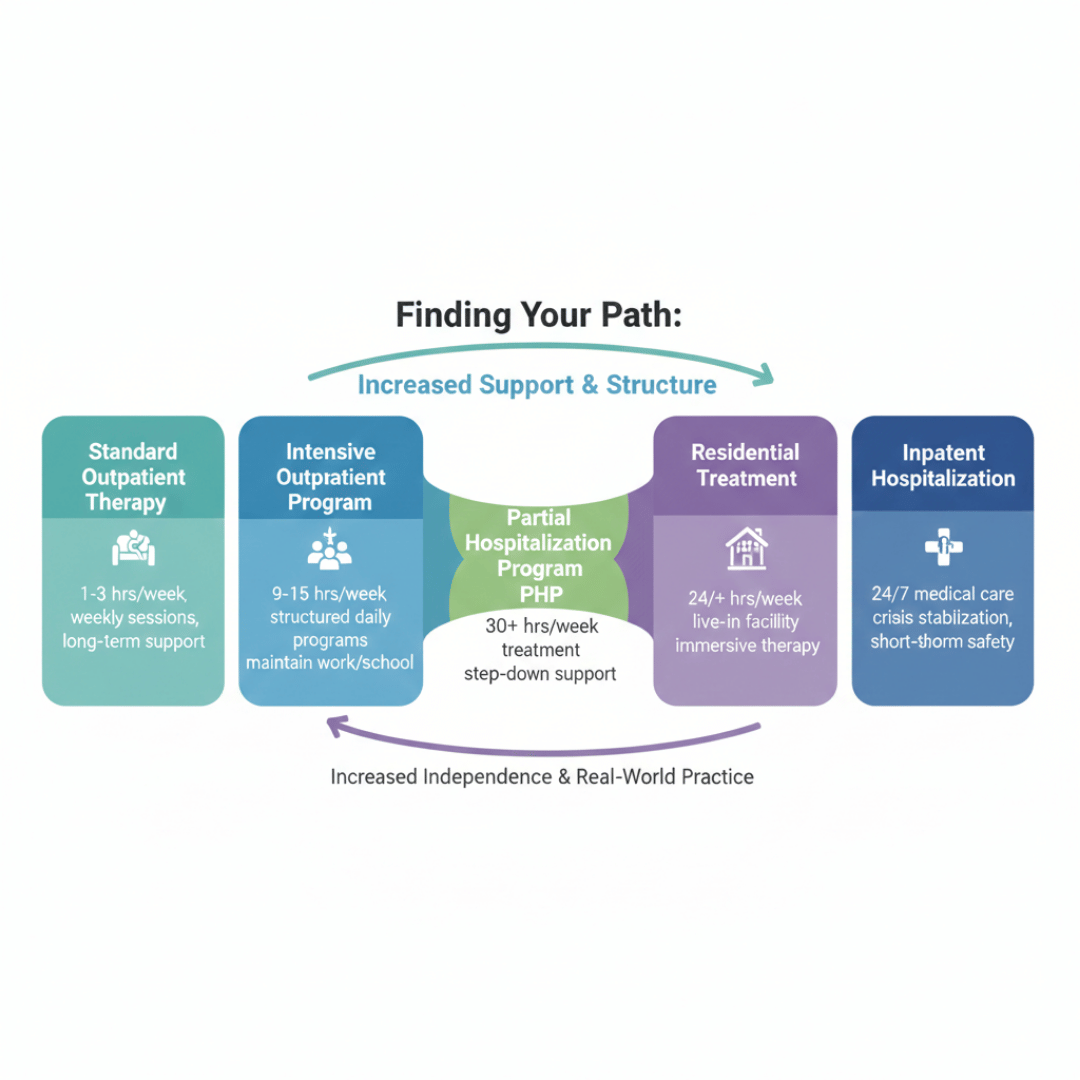
Types of Outpatient Programs at Lucent
1. Partial Hospitalization Program (PHP)
PHP is the most intensive form of outpatient care, often used as a step-down from inpatient treatment or as an alternative to residential care.
Includes:
-
5–7 days per week of programming
-
6+ hours per day of therapy and activities
-
Daily check-ins with clinical staff
Best for: Individuals needing significant support and structure without living at a facility.
2. Intensive Outpatient Program (IOP)
IOP offers a more flexible schedule than PHP while still providing comprehensive care.
Includes:
-
3–5 days per week
-
3–4 hours per day
-
A mix of individual therapy, group therapy, and psychoeducation
Best for: Those with moderate mental health symptoms seeking consistency and support.
Outpatient vs. Inpatient: Key Differences
| Feature | Standard Outpatient (OP) | Intensive Outpatient (IOP) | Partial Hospitalization (PHP) |
| Time Commitment | 1–3 hours per week | 9–15 hours per week | 30+ hours per week |
| Daily Routine | Fits around a full-time job | Fits around part-time work/school | Full-day clinical focus |
| Support Level | Maintenance & Check-ins | Moderate: Skills building | High: Crisis stabilization |
| Best For… | Long-term stability | Managing active symptoms | Stepping down from hospital |
| Real-World Practice | Maximum | High (practice skills daily) | Moderate (evenings only) |
Why Outpatient Works: Healing in the Real World
One of the greatest failures of residential “rehab” is the “bubble effect”—the difficulty of transitioning from a sterile, controlled environment back to the stresses of home.
Outpatient care at Lucent Recovery utilizes “In-Vivo” practice. This means if you learn a distress tolerance skill at 2:00 PM in group therapy, you are applying it at 6:00 PM during dinner with your family or while navigating Austin traffic. This immediate application helps “wire” new coping mechanisms into your brain much faster than traditional isolated treatment.
Benefits of Outpatient Mental Health Care
-
Affordability – More cost-effective than residential programs
-
Flexibility – Ideal for those balancing daily responsibilities
-
Continued Support – Ongoing connection with therapists and peers
-
Integration – Practice coping strategies in real-life situations
-
Personalization – Custom treatment plans based on your needs
What to Expect at Lucent Recovery and Wellness
At Lucent, we combine evidence-based mental health treatment with compassion, flexibility, and a trauma-informed approach. Whether you’re dealing with anxiety, depression, PTSD, or another challenge, our programs are built to meet you where you are.
Core services include:
-
Individual therapy with licensed clinicians
-
Group therapy and peer support
-
Family counseling
-
Psychiatric evaluation and medication management
-
Life skills and case management
-
Specialized trauma-informed care
Holistic options include:
-
Yoga and mindfulness
-
Nutrition and wellness coaching
-
Art and music therapy
🡒 Meet our team and explore our therapeutic approach.
Who Is a Good Fit for Outpatient Treatment?
You may benefit from outpatient care if you:
-
Are medically and emotionally stable
-
Have a supportive home or community environment
-
Want to continue working, studying, or caring for your family
-
Are experiencing mild to moderate symptoms of anxiety, depression, PTSD, or other conditions
Outpatient care may not be suitable if you are:
-
In crisis or experiencing suicidal ideation
-
Struggling with severe, unmanaged symptoms
-
Lacking a safe or supportive environment at home
🡒 Take our self-assessment or contact us to see what level of care is right for you.
Is Outpatient Right for You? Check all that apply:
-
[ ] I have a safe, stable place to sleep at night.
-
[ ] I am not currently in an active medical or psychiatric crisis.
-
[ ] I have responsibilities (work, family, school) that I cannot put on hold.
-
[ ] I want to build a support network within the local Austin community.
-
[ ] I am ready to be an active participant in my own recovery.
Take the Next Step Toward Mental Health Recovery
Outpatient mental health treatment can provide the support, structure, and tools you need while allowing you to stay grounded in your everyday life. At Lucent Recovery and Wellness in Austin, TX, we are committed to helping you find lasting healing through personalized, trauma-informed care.
Not sure which level of care fits your life? Schedule a 15-minute ‘Right Fit’ consultation with our Austin clinical team. We’ll help you navigate the options no pressure, just clarity.
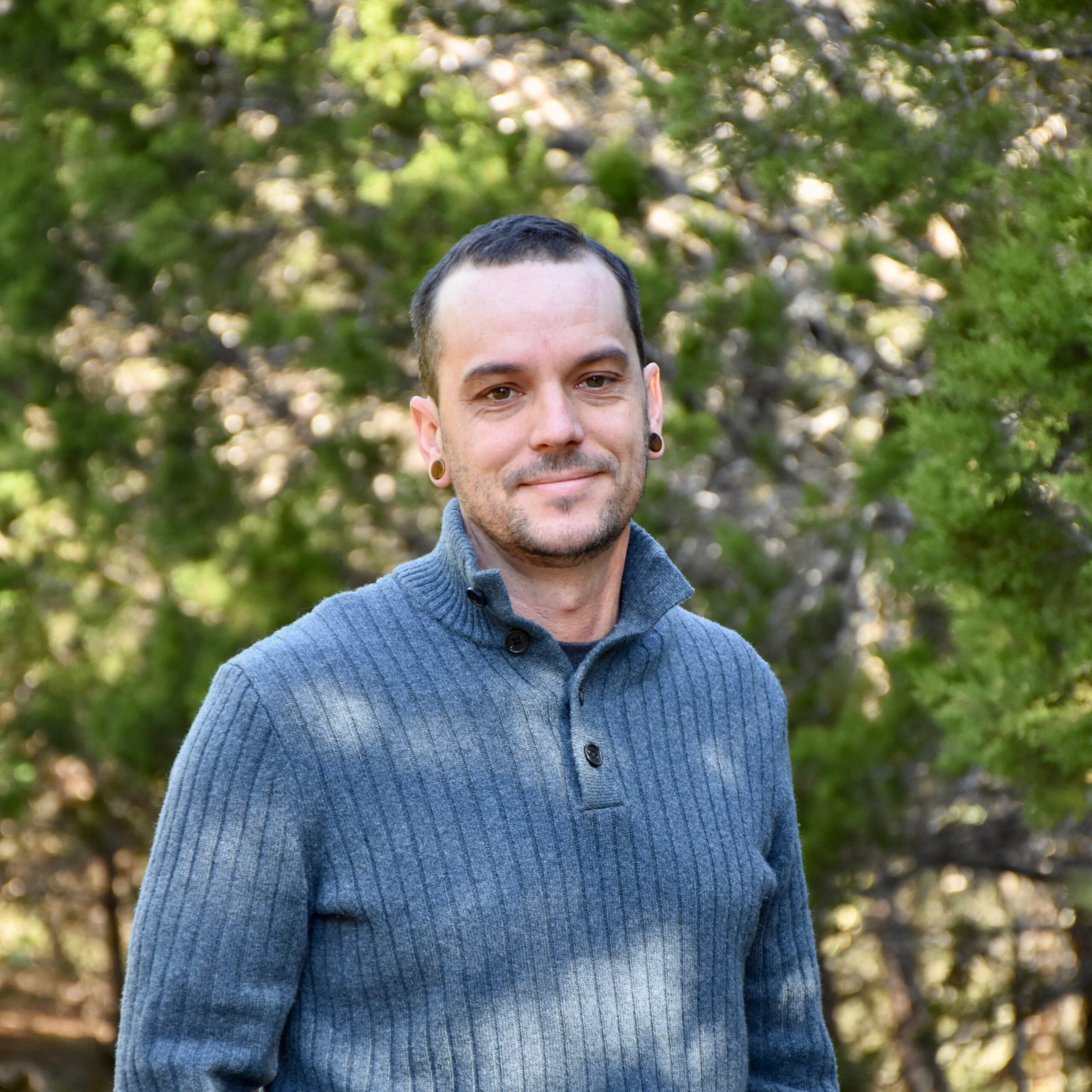
Reviewed by Chris Hudson, LPC, LCDC
Founder & Executive Director – Lucent Recovery and Wellness, Austin, TX (2020–Present)
Leads clinical programs and develops innovative therapeutic approaches integrating experiential and creative therapies.
Board Member – Reklaimed, Austin, TX
Supports recovery-focused nonprofit initiatives fostering community and creative skill-building.
Clinical Leadership Roles – South Meadows Recovery, Inc.
Held leadership positions overseeing program development, clinical operations, and organizational management.
EDUCATION & CREDENTIALS
- M.A., Clinical Mental Health Counseling – Seminary of the Southwest (2021)
- B.A., Studio Art – Lewis & Clark College (2004)
- Licensed Professional Counselor (LPC), Texas
- Licensed Chemical Dependency Counselor (LCDC), Texas