Why So Many People in Austin Wait Too Long to Seek Counseling (And What Finally Gets Them There)
Authored by the Clinical Team at Lucent Recovery and Wellness
Reviewed by Chris Hudson, MA, LPC, LCDC
A 2024 report from the Kaiser Family Foundation found that among Texas adults who reported symptoms of anxiety or depression, 30% said they needed counseling or therapy but hadn’t received it. That’s not a small number. In a city the size of Austin, that gap represents tens of thousands of people managing real distress without professional support — going to work, maintaining relationships, and keeping up appearances while quietly struggling.
We see this pattern at Lucent Recovery and Wellness all the time. Someone calls us after months, sometimes years, of struggling quietly. They knew something was wrong. They kept waiting for the right moment, the right reason, or the right amount of courage to pick up the phone. And when they finally do call, one of the first things they say is: “I should have done this a long time ago.”
This post is for anyone still in that waiting room.
The Austin Mental Health Landscape Is More Complicated Than It Looks
Austin has a reputation as a progressive, health-forward city. There are yoga studios on every corner, wellness apps downloaded by millions, and a cultural conversation about mental health that’s more open than it was a decade ago. But the on-the-ground reality of accessing mental health care in Austin is a lot messier than the brand image suggests.
Austin has grown faster than its mental health infrastructure. According to NAMI Texas, as of 2024, more than 15 million Texans live in communities without enough mental health professionals to meet demand. Statewide, 839,000 adults who needed treatment for mental illness couldn’t access it, primarily due to cost and provider shortages. And in the NAMI Texas 2025-2026 Public Policy Platform, Texas was ranked dead last in the nation for mental health care and workforce capacity.
Travis County has more resources than rural Texas — but waitlists for individual therapy can stretch weeks or months. Insurance coverage for behavioral health services remains inconsistent. And for people already dealing with anxiety, depression, or trauma, the process of finding help can itself feel like an obstacle course.
That’s the cruel irony of mental health barriers: the illness makes it harder to fight the illness. Anxiety makes initiating contact scary. Depression makes the research feel pointless. Trauma can make reaching out feel unsafe. So people wait.
Why People Delay Seeking Counseling: The Real Reasons
Over the years, we’ve heard just about every reason someone gives for waiting. Most of them come back to a handful of common threads worth naming directly.
“I didn’t think it was bad enough.” Mental health symptoms often develop gradually. People adapt, adjust, and rationalize. The anxiety that started as occasional nervousness becomes a baseline hum of dread. The low mood that came and went starts to feel permanent. By the time daily functioning is genuinely affected, the idea that things aren’t that serious has become a deeply held belief.
The truth is that you don’t have to hit rock bottom to deserve support. You don’t need a crisis to justify counseling. If your quality of life is consistently lower than it should be, that’s enough of a reason. Our post on when outpatient mental health treatment is the right fit can help you think through where you fall on that spectrum.
“I didn’t know what kind of help to look for.” Therapy, psychiatry, IOP, PHP, counseling, coaching, support groups — the distinctions aren’t always clear, and most people don’t know where they fit. A lot of people spend so much energy trying to figure out the right first step that they don’t take any step at all.
For a structured breakdown of how IOP compares to standard weekly counseling, that’s a good place to start clarifying where you might fit. And if you’re not sure whether you need standard therapy or something more intensive, our overview of IOP versus PHP can also help orient you.
“I was worried about what it would mean.” Stigma around mental health care persists, even in a city like Austin. Seeking counseling can still feel like an admission of weakness or failure. What the research consistently shows, though, is that people who engage in mental health treatment tend to perform better — not worse — in every domain of their lives.
“I couldn’t afford it or didn’t have time.” These are legitimate barriers. What we can say is that intensive outpatient programs are often covered by insurance more comprehensively than people expect, and are specifically designed to fit around work and family schedules. Mental health parity laws require most plans to cover behavioral health at the same level as medical care.
“I kept hoping it would get better on its own.” Chronic depression, anxiety disorders, trauma responses, and mood dysregulation rarely improve on their own over time. More often they deepen and widen, affecting more areas of life the longer they go unaddressed.
What Counseling in Austin Actually Looks Like Today
The word “counseling” covers a wide range of services, and it’s worth understanding what’s available.
Weekly outpatient therapy is what most people picture — a 50-minute session with a licensed therapist, once or twice a week. Appropriate for mild to moderate concerns, specific life stressors, or ongoing maintenance.
Intensive Outpatient Programs (IOP) provide a higher level of structured clinical care — typically three to five days per week — for people whose symptoms require more support than weekly therapy can deliver. At Lucent’s IOP in Austin, this includes individual therapy, structured group sessions, skills-based workshops, and specialty modalities. All sessions are led by master’s-level clinicians.
We treat adults navigating depression, anxiety, complex trauma, PTSD, bipolar disorder, borderline personality disorder, and ADHD. For people coming from outside Austin, transitional housing is available so that geography doesn’t have to be a barrier.
Partial Hospitalization Programs (PHP) sit above IOP — full-day programming five days per week for people who need more intensive support without inpatient hospitalization. Our post comparing IOP and PHP in detail explains the difference clearly.
Crisis care is available through the 988 Suicide and Crisis Lifeline (call or text 988) and Austin’s Integral Care, which operates 24/7 crisis lines and mobile response teams.
The Pattern We See at Lucent
People who call us often describe the same progression. Things started manageable. They tried to handle it themselves. They maybe saw a therapist for a while with mixed results. Then something shifted — a relationship broke down, work became untenable, a coping mechanism stopped working — and they realized the support they’d been accessing wasn’t enough.
What we find is that people almost universally wish they’d reached out sooner. Not because waiting made things catastrophically worse, but because the time spent managing alone was costly in ways that are hard to articulate — opportunities missed, relationships strained, years spent at a lower quality of life than necessary.
The SAMHSA 2024 National Survey on Drug Use and Health found that of 61.5 million U.S. adults with a mental health condition in 2024, nearly 29.5 million received no treatment at all. The most common reasons cited weren’t that people didn’t want help — they were that people didn’t know where to start, thought they could handle it on their own, or worried about cost.
What to Do If You’ve Been Waiting
If you’re in Austin and you’ve been thinking about counseling, the most important thing is to take one concrete action today. That might be calling a provider, filling out a contact form, or talking to your primary care doctor. Any one of those moves.
You might also find it useful to read our companion pieces on how to choose the right mental health program in Austin and how IOP compares to traditional counseling before making a decision. Both can help you arrive at a conversation with a provider already oriented to what you need.
At Lucent, we offer confidential consultations where we can help you figure out whether our level of care is the right fit, or whether a different kind of support might serve you better.
Learn more about our Austin IOP program or reach out to our team to start that conversation.
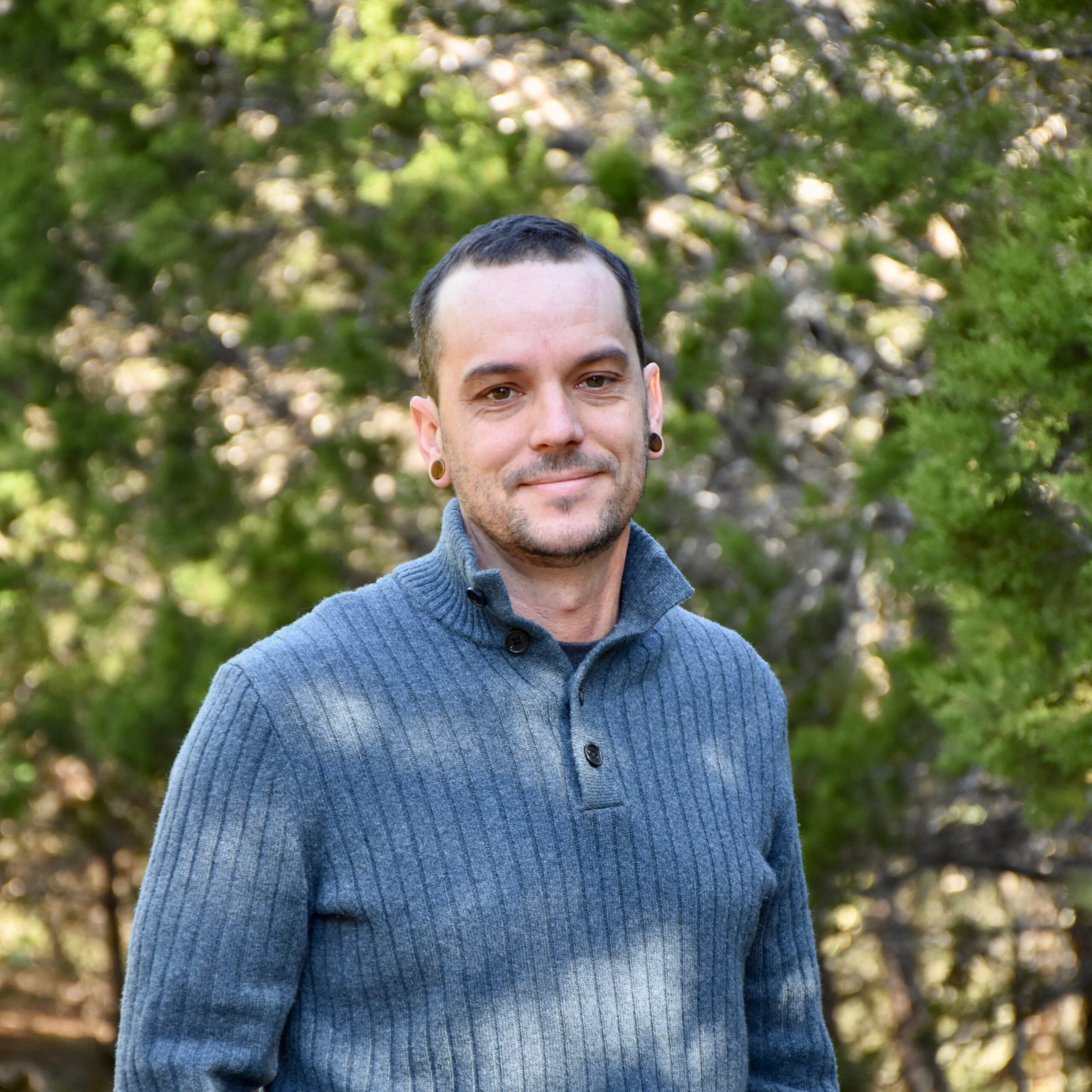
Reviewed by Chris Hudson, LPC
Founder & Executive Director – Lucent Recovery and Wellness, Austin, TX (2020–Present)
Leads clinical programs and develops innovative therapeutic approaches integrating experiential and creative therapies.
Board Member – Reklaimed, Austin, TX
Supports recovery-focused nonprofit initiatives fostering community and creative skill-building.
Clinical Leadership Roles – South Meadows Recovery, Inc.
Held leadership positions overseeing program development, clinical operations, and organizational management.
EDUCATION & CREDENTIALS
- M.A., Clinical Mental Health Counseling – Seminary of the Southwest (2021)
- B.A., Studio Art – Lewis & Clark College (2004)
- Licensed Professional Counselor (LPC), Texas
- Licensed Chemical Dependency Counselor (LCDC), Texas