
Anxiety Treatment for Adults in Arlington, TX: What Actually Works and When to Escalate
Authored by the Clinical Team at Lucent Recovery and Wellness
Reviewed by Chris Hudson, MA, LPC, LCDC
When SAMHSA published the 2025 National Survey on Drug Use and Health on July 27, 2026, it reported that 6.6 percent of American adults, roughly 17.5 million people, had moderate or severe symptoms of anxiety in the previous two weeks.
Two weeks. Not a lifetime prevalence figure, not a past-year estimate. A fourteen day window.
That figure sits alongside a longer trend documented by the National Center for Health Statistics, which found that the share of adults reporting any symptoms of anxiety in a two-week period rose from 15.6 percent in 2019 to 18.2 percent in 2022, with increases across nearly every subgroup examined.
We open with those numbers not to make a point about a national crisis, which everyone has heard, but to make a narrower one. Anxiety is the most common thing we assess for, it is the condition people most often try to manage alone for the longest, and it is the one where the gap between “I am handling it” and “this is running my life” is widest and hardest to see from the inside.
Anxiety is not one thing
The word covers a lot of ground, and the differences matter because they point to different treatments.
Generalized anxiety disorder is persistent, diffuse worry that moves from topic to topic. The content changes. The worry does not. People often describe it as a background process they cannot shut off, and they frequently do not recognize it as a condition because it has been running since childhood.
Panic disorder involves discrete episodes of intense physical symptoms, often with a genuine conviction that something catastrophic is happening. What sustains it is usually not the panic attacks themselves but the fear of the next one, which reorganizes a person’s life around avoidance.
Social anxiety disorder is fear of scrutiny and negative evaluation. It is frequently mistaken for introversion or shyness, including by the person experiencing it, and it can quietly cap a career for decades.
Obsessive-compulsive disorder involves intrusive, unwanted thoughts and compulsive behaviors performed to reduce the distress those thoughts create. It responds to specific treatment approaches and it is commonly misidentified for years.
Anxiety within post-traumatic stress has a different structure again, organized around a specific experience rather than diffuse threat, and it needs trauma-focused work rather than general anxiety management.
The reason for the taxonomy is practical. Treatment that helps generalized worry is not the same as treatment for OCD, and someone who has tried general anxiety strategies without success may simply have been treating the wrong thing.
What actually has evidence behind it
We get asked frequently what works, so here is a fair summary rather than a pitch.
Cognitive behavioral therapy has the strongest and most consistent evidence base across anxiety disorders. It works by changing the relationship between thoughts, physical sensations, and behavior, and it is skills-based rather than purely exploratory.
Exposure-based approaches, which are a family within CBT, address the avoidance that maintains most anxiety. This is the part people dread and it is also, for panic and social anxiety in particular, the mechanism that produces durable change.
Dialectical behavior therapy contributes distress tolerance and emotion regulation skills that are useful when anxiety is severe enough that someone cannot get to the cognitive work yet.
Medication is effective for many people. That decision belongs to you and a prescribing clinician, and it is neither a failure nor a requirement.
Physical activity and sleep have real supporting evidence as adjuncts. Recent syntheses, including a 2026 umbrella review in the British Journal of Sports Medicine, support a moderate effect of exercise on anxiety and depressive symptoms. Adjunct is the operative word.
What does not have good evidence: reassurance-seeking, endless information gathering, and most of what people do naturally when anxious. Those reduce distress in the moment and strengthen the pattern over time, which is exactly why anxiety is so hard to outgrow on your own.
The Arlington version of managing it alone
We serve adults across the Dallas-Fort Worth metroplex, and Arlington’s economic mix produces a recognizable pattern.
It is a city of shifts and schedules. Manufacturing and logistics, hospitality and entertainment work around the stadium district, healthcare, a large university population, and a lot of people commuting in two directions because Arlington sits between Dallas and Fort Worth without a conventional transit spine.
That mix means a great many people here work hours that do not match when outpatient clinics are open. Second shift. Rotating schedules. Weekends. Two jobs.
The practical result is that treatment is not just something people are avoiding for emotional reasons. It is something a lot of people genuinely cannot schedule. And when care is structurally unavailable for years, the coping strategies that fill the gap tend to be the ones that are available at two in the morning: alcohol, isolation, and avoidance.
Irregular schedules also degrade sleep, and disordered sleep amplifies anxiety in a loop that is hard to break from inside. By the time someone calls us, the sleep problem and the anxiety problem have usually merged into one thing.
When weekly therapy is enough, and when it is not
Most anxiety is well treated at the outpatient level. A skilled therapist doing structured CBT once a week helps a great many people, and if you have not tried that, it is the sensible place to start. Our counseling services cover that level.
There are situations where it is not enough, and they are reasonably identifiable.
When avoidance has taken over. If your life has narrowed significantly, if there are places you no longer go and things you no longer do, exposure work becomes difficult to sustain at one session a week. The avoidance rebuilds faster than the session can dismantle it.
When it has merged with something else. Anxiety plus a depressive episode, or anxiety plus a substance use pattern, needs coordinated treatment rather than sequential attempts. That is the ordinary case rather than the complicated one.
When you have already done a year or more without movement. A plateau is information.
When the physical symptoms are running your day. Sleep gone, appetite gone, chest tight from morning to night. At that point the priority is stabilization before insight.
In those situations a mental health intensive outpatient program is worth considering. Several hours of structured programming, several days a week, over eight to twelve weeks. The difference is contact density: you practice something, use it badly, and bring it back the next day rather than six days later. For anxiety specifically, that shortened feedback loop is most of the value.
For adults traveling from Arlington, most stay in our transitional housing in Austin rather than commuting three hours several times a week, which also removes the schedule problem that made local care unworkable in the first place. Our programming includes movement and outdoor work alongside the clinical hours, and you can see what to expect for a sense of the daily rhythm.
What we actually look at during an anxiety assessment
People often expect a questionnaire and a label. The questionnaires exist and we use validated ones, but most of the useful information comes from a longer conversation about structure rather than symptoms.
When does it spike, and when does it not? Anxiety that is worst on Sunday evening and eases on Thursday is telling you something different from anxiety that is identical every day including on vacation.
What are you doing to make it stop? This is often the most diagnostic question in the whole assessment. Checking, seeking reassurance, researching, avoiding, drinking, over-preparing. The relief behaviors describe the shape of the condition better than the worry content does.
What has your life stopped including? Anxiety measures its own severity in the things a person no longer does. Someone who has quietly stopped driving on highways, or flying, or eating in restaurants, has a more significant condition than their self-report usually suggests.
How is sleep failing, specifically? Trouble falling asleep with a racing mind points one direction. Waking at four unable to return points somewhere else, often toward a depressive process running underneath.
What else is present? Depression, trauma history, ADHD, and substance use all change the treatment plan. Anxiety on its own is the exception rather than the rule.
What have you already tried, and what happened? Someone who has done a year of supportive talk therapy without exposure work has not really had a trial of the treatment with the best evidence behind it. That is worth knowing before concluding therapy does not work for them.
The output is not just a diagnosis. It is a picture of what maintains the pattern, which is what treatment actually targets.
One more thing worth naming: we ask what you are hoping treatment will change. People frequently answer with the absence of a feeling, which is not a workable target. Reframing it around what you would be doing again if the anxiety were smaller gives both of us something we can actually measure, and it tends to make the treatment plan concrete rather than aspirational.
Frequently asked questions
Is it still anxiety if I do not feel worried, just physically wound up? Yes, frequently. Anxiety often presents primarily in the body: chest tightness, jaw clenching, stomach trouble, a persistent sense of being braced for something. Plenty of people arrive having been evaluated for cardiac or gastrointestinal problems first.
I have had this my whole life. Can it actually change? Long-standing anxiety is treatable, though the work is usually slower than it is for something recent, and the goal is generally sustainable management rather than the total absence of anxiety. Anyone promising you a cure is overselling.
Will treatment mean I have to face the things I am afraid of? Exposure-based work is a core part of effective anxiety treatment, and yes, it involves approaching what you have been avoiding. It is done gradually, collaboratively, and at a pace you agree to. It is not a stunt.
Does anxiety treatment require medication? No. Medication helps many people and is worth discussing with a prescriber, but psychotherapy is effective on its own for a substantial number of people with anxiety disorders.
Can I do a program while working shift hours? Our programming runs several days a week during the day, so it does not layer cleanly onto a full shift schedule. Many clients traveling from North Texas step back from work for the duration, and our case management team can help with leave documentation if that is the route you take.
What if my anxiety is mostly about a real situation in my life? That is worth taking seriously rather than pathologizing. Part of assessment is distinguishing a disorder from a reasonable response to difficult circumstances, and sometimes the answer is both. Knowing which is which changes what you should do.
How will I know it is working? We use standardized measures throughout, including validated anxiety scales, and we review them with you rather than relying on impressions. You should be able to see the trajectory.
Fourteen days is a small window
Seventeen and a half million American adults reported moderate or severe anxiety symptoms in a two-week period. That is a lot of people carrying something that is treatable, in a country where the share of adults with anxiety symptoms has been rising for years.
Most of them are managing it alone, and the strategies that make anxiety tolerable in the short term are usually the ones that keep it in place. That is not a character problem. It is how the condition works, and it is a large part of why anxiety responds so well to structured treatment and so poorly to willpower.
If yours has been running the show for a while, we would be glad to talk about what level of care makes sense. Our team will assess honestly, verify your insurance, and tell you if our program for adults traveling from Arlington is not the right answer. No referral is needed. You can reach us through our contact page.
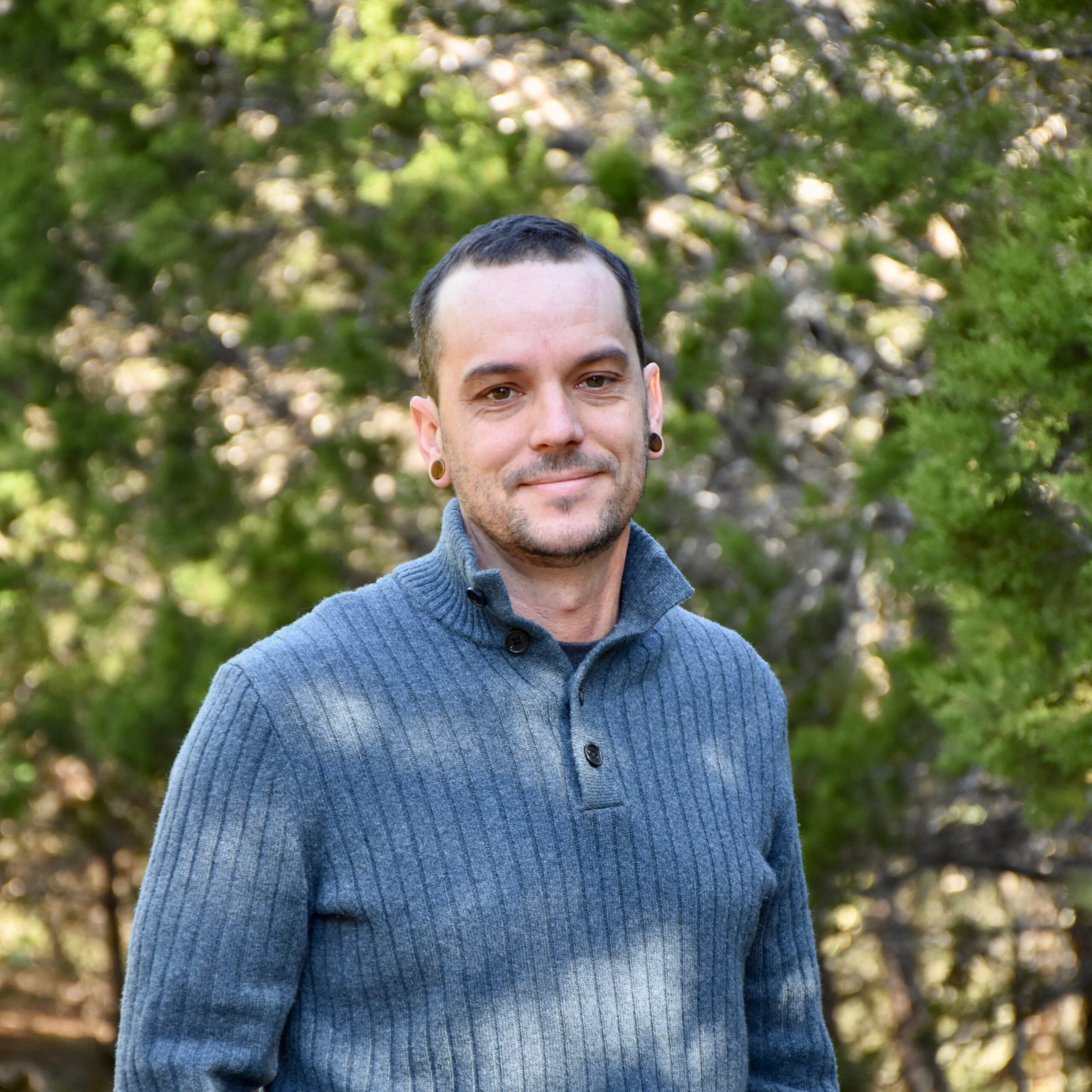
Reviewed by Chris Hudson, LPC
Founder & Executive Director – Lucent Recovery and Wellness, Austin, TX (2020–Present)
Leads clinical programs and develops innovative therapeutic approaches integrating experiential and creative therapies.
Board Member – Reklaimed, Austin, TX
Supports recovery-focused nonprofit initiatives fostering community and creative skill-building.
Clinical Leadership Roles – South Meadows Recovery, Inc.
Held leadership positions overseeing program development, clinical operations, and organizational management.
EDUCATION & CREDENTIALS
- M.A., Clinical Mental Health Counseling – Seminary of the Southwest (2021)
- B.A., Studio Art – Lewis & Clark College (2004)
- Licensed Professional Counselor (LPC), Texas
- Licensed Chemical Dependency Counselor (LCDC), Texas