
Texas Ranks Near the Bottom for Mental Health Access. What That Means If You Need Care.
Authored by the Clinical Team at Lucent Recovery and Wellness
Reviewed by Chris Hudson, MA, LPC, LCDC
If you’ve tried to find mental health care in Texas and come away feeling like the system was working against you, we want to say clearly: it wasn’t your imagination, and it wasn’t a failure of effort on your part.
We work in this system every day. We field the calls from people who have already tried four other places. We hear from families in Waco and Killeen who couldn’t find anything closer than Austin. We talk to people whose insurance technically covers behavioral health and who still can’t find a provider who takes it and has an opening. The friction is real, it’s measurable, and it’s worse here than in nearly every other state.
Mental Health America’s State of Mental Health in America report, with data pages updated in April 2026, ranks Texas 50th out of 51 on access to care. Only Alabama ranks lower. That ranking pulls together ten separate measures covering insurance coverage, cost barriers, unmet need, youth services, and workforce availability, and Texas performs badly on most of them.
This piece walks through what those numbers actually say, because we think people navigating this deserve to understand the terrain rather than assume the difficulty is personal. We’ll also be honest about what can and can’t be worked around.
One clarification before we start. You may see articles reporting that Texas ranks 51st, dead last. Mental Health America’s own published table places Texas at 50 and Alabama at 51. We’re using the figure from the source rather than the secondhand version, and we’d encourage the same caution with any statistic you encounter on this topic.
The insurance problem: highest uninsured rate in the country
Of the ten measures in Mental Health America’s access ranking, this is the one where Texas finishes absolutely last.
In 2022 to 2023 combined data, 19.4% of Texas adults with any mental illness had no health insurance. That’s 889,000 people, and it’s the worst rate of any state. Nationally the figure is 9.2%. Texas is more than double.
Nearly one in five Texans living with a mental illness has no coverage at all. Not inadequate coverage. None.
We’re direct with people about what this means, because a lot of what gets written about mental health assumes an insured reader. If you’re uninsured in Texas, your realistic options are community mental health centers, federally qualified health centers, sliding-scale private providers, and self-pay arrangements. Those options exist and they’re worth pursuing. They also involve longer waits and less choice, and pretending otherwise doesn’t help anyone.
Mental Health America also notes that changes passed in federal legislation in 2025 are projected to reduce coverage further, with Congressional Budget Office estimates of roughly 15 million people nationally losing current health coverage. Texas is entering that period with the highest uninsured rate in the country already.
The cost problem: four in ten priced out of a doctor’s visit
Here’s the figure that stopped us when we read this year’s data.
Among Texans who reported experiencing 14 or more mentally unhealthy days per month, 42.72% were unable to see a doctor because of cost. That’s 1,552,114 people. The national figure is 26.58%.
Sit with the population that describes. These aren’t people with mild, occasional difficulty. These are Texans reporting frequent mental distress, roughly half the month or more, and more than four in ten of them couldn’t afford medical care.
Mental Health America ranks Texas 49th on this measure, and the state’s rate is dramatically worse than the next-worst, which is 34.54% in Georgia. Texas is an outlier even among states that perform poorly.
Cost isn’t a marginal barrier here. Nationally, 59.8% of adults with a mental illness who sought or thought they needed care said they didn’t receive it because they thought it would cost too much. In Texas, that fear is more often accurate.
What we take from this practically: verifying the actual cost early is more important in Texas than almost anywhere. Ask any program to check your benefits and give you a real out-of-pocket estimate before you commit to anything. Ask what happens if your coverage changes mid-treatment. If a provider won’t answer those questions plainly, that’s worth knowing before you start rather than after.
The workforce problem: 640 to 1
Mental Health America puts Texas mental health workforce availability at approximately one provider for every 640 residents. The national ratio is about 320 to 1. Texas ranks 50th on this measure as well.
Twice the national ratio. Half the providers per person.
The federal picture adds context. According to the Health Resources and Services Administration’s Designated Health Professional Shortage Areas quarterly summary, with data as of December 31, 2025, there were 6,807 designated mental health professional shortage areas across the United States, covering a population of 137,133,953 people. HRSA estimates it would take 6,800 additional practitioners to remove all of those designations. Of those shortage areas, 4,212 are rural, covering more than 30 million people.
Texas holds the largest absolute practitioner gap of any state in the state-level breakdowns drawn from that federal data, driven by a combination of population size, geographic spread, and provider distribution. The vast majority of Texas counties are wholly or partially designated as mental health shortage areas.
What this looks like in daily life:
Waits. When there are half as many providers per capita, appointments book out further. This is arithmetic, not a service failure by any individual practice.
Distance. In much of rural Texas, the nearest psychiatrist is not in the same county. For someone with a car and flexible hours, that’s inconvenient. For someone without either, it’s a closed door.
Specialty scarcity. General counseling is easier to find than trauma-specialized care, child and adolescent psychiatry, or programs equipped for co-occurring mental health and substance use conditions. The more specific your need, the thinner the supply.
Provider turnover. Reimbursement rates and caseload pressure push clinicians out of the field and out of insurance networks. Mental Health America identifies low reimbursement as a primary barrier to recruiting and retaining the behavioral health workforce.
Unmet need, and what Texans go without
Texas reports that 25.2% of adults with any mental illness had an unmet need for treatment, about 597,000 people. That’s essentially identical to the national figure of 25.2%, which is worth noting honestly: on this particular measure Texas is average, not exceptional.
The state performs worse on other measures. Among Texas adults with a substance use disorder, 76.95% did not receive treatment, roughly 3,023,000 people. Among Texas youth aged 12 to 17 with a major depressive episode, 52.2% received no mental health services, about 216,000 young people.
Two hundred and sixteen thousand Texas adolescents with depression, untreated in a single year.
Where telehealth genuinely helps, and where it doesn’t
Virtual care has changed the math in Texas more than in most states, and we don’t want to undersell it. If you’re in a county with no licensed therapist, telehealth is the difference between care and no care. We provide individual mental health counseling virtually to people located anywhere in Texas for exactly this reason.
Where it works well: individual psychotherapy, medication management follow-ups, and continuity when someone moves or their schedule changes. The evidence base for teletherapy in depression and anxiety is reasonably strong.
Where it’s harder: reliable broadband is not universal in rural Texas, and neither is a private room to talk in, which is a genuine and underdiscussed barrier for people in crowded housing. Higher levels of care that depend on group cohesion and in-person structure translate imperfectly. And telehealth doesn’t fix the workforce shortage. It redistributes a limited number of clinicians rather than creating more of them.
Telehealth is a real tool. It isn’t a solution to the underlying problem.
What Texans can actually do inside this system
We’re not going to pretend individual strategy overcomes a structural shortage. But some approaches work better than others, and after years of doing this here, these are what we’d tell a friend.
Ask about level of care in the first call. “Do you have any openings” gets you a yes or no. “What level of care would you recommend, and how quickly could someone be assessed” gets you a clinical answer and a timeline, and it often surfaces options you didn’t know to ask about.
Ask whether they’re accepting new patients, not just whether they’re in network. These are separate facts. Directories track the first badly and the second not at all.
Look at structured programs, not only individual therapists. This one surprises people. Intensive outpatient and partial hospitalization programs frequently have faster access than a specific therapist’s calendar, because they run on cohort schedules. If you’ve been waiting weeks for a weekly appointment, a higher level of care may be both more available and more appropriate.
Get one honest assessment even if that provider isn’t your final answer. A good clinical assessment tells you what intensity of care you need, which makes every subsequent call more efficient. Any program worth using will refer you out if they’re not the right fit.
Verify cost before you enroll, not after. Given the numbers above, this matters more in Texas than the general advice suggests.
Use the free federal resources. SAMHSA’s National Helpline is staffed 24 hours a day, is free and confidential, and maintains referral information including free and low-cost options. It costs nothing to call.
Our own mental health treatment in Austin page lays out how the levels of care differ and how our clinicians decide between them, if you want a concrete example of what that assessment conversation covers.
Frequently asked questions
Does Texas ranking 50th mean I can’t get good care here? No. The ranking measures access, not quality. There are excellent clinicians and programs throughout Texas, including in Austin. What the ranking predicts is that finding them takes more persistence, waits are longer, and cost is more likely to be a barrier than it would be in Vermont or Massachusetts. Difficulty of access and quality of available care are different questions.
Why is the Texas uninsured rate so much higher than other states? The state has consistently had the highest overall uninsured rate in the country, driven substantially by decisions about Medicaid eligibility and the size of its uninsured working population. Mental Health America notes that Medicaid is the largest single payer for behavioral health care nationally, so eligibility rules translate fairly directly into who can access mental health treatment.
I live outside Austin. Is it worth driving in for treatment? For some people yes, for others no, and it depends heavily on the level of care. A weekly appointment is rarely worth a two-hour round trip, and virtual counseling is usually the better answer. A structured program several days a week is a bigger commitment but also the thing that’s hardest to find locally. We serve the greater Austin area including Cedar Park, Georgetown, Lakeway, Bee Cave, Kyle, San Marcos, and Bastrop, and we’d rather talk through whether the drive makes sense for your situation than have you assume either way.
How long should I expect to wait for an appointment in Texas? It varies enormously by level of care, specialty, and geography, and any specific number would be misleading. What we’d say is that structured outpatient programs often move faster than individual therapy, and that if you’re being quoted multi-month waits everywhere you call, that’s worth mentioning explicitly to the next program you contact, because it changes how urgently they’ll treat your inquiry.
Are there free or low-cost mental health options in Texas? Yes, though supply is limited relative to need. Community mental health centers, federally qualified health centers, university training clinics, and sliding-scale private providers all exist. SAMHSA maintains referral information for free and low-cost treatment, and calling their helpline is a more efficient starting point than searching directories on your own.
Does the shortage affect psychiatric medication access differently than therapy? Yes, and generally more severely. Prescribers are scarcer than therapists, and child and adolescent psychiatry is scarcer still. This is one reason programs with in-house psychiatric providers can be worth considering, since access to medication evaluation is bundled rather than requiring a separate search and separate wait.
What if I need help today and can’t wait for an appointment? Call or text 988 for the Suicide and Crisis Lifeline, which handles crises broadly and not only suicidal thoughts. For a psychiatric or medical emergency, call 911. Neither of those requires insurance, and neither requires you to have already established care anywhere.
What we’d want you to take from this
Texas makes getting mental health care harder than it should be. The highest uninsured rate in the country, more than four in ten distressed Texans priced out of a doctor’s visit, and half the national number of providers per resident. Those are facts about a system, and they’re not going to be fixed by anyone reading this article.
What they don’t mean is that care is unavailable to you. They mean the search takes more persistence than it fairly should, and that knowing how the system works is a genuine advantage. Almost every person we’ve admitted got here by making one more call than felt reasonable.
Recovery from mental health conditions is ordinary. SAMHSA’s 2025 national survey found 44.1 million American adults who describe themselves as in recovery or recovered from a mental health issue. Plenty of them are Texans who had to work harder to get there.
If you’re in Central Texas and you’ve been running into walls, we’re glad to talk. We’ll tell you what level of care we’d recommend, what it would cost, and whether we’re the right place. If we’re not, we’ll point you toward somewhere that is. Call 512-588-3899 or reach us through our contact page.
If you need support right now
If you’re in crisis or having thoughts of harming yourself, you don’t need to wait for an appointment. Call or text 988 to reach the 988 Suicide & Crisis Lifeline, available 24 hours a day. For treatment referrals and information, SAMHSA’s National Helpline is free and confidential at 1-800-662-4357. If this is a medical emergency, call 911.
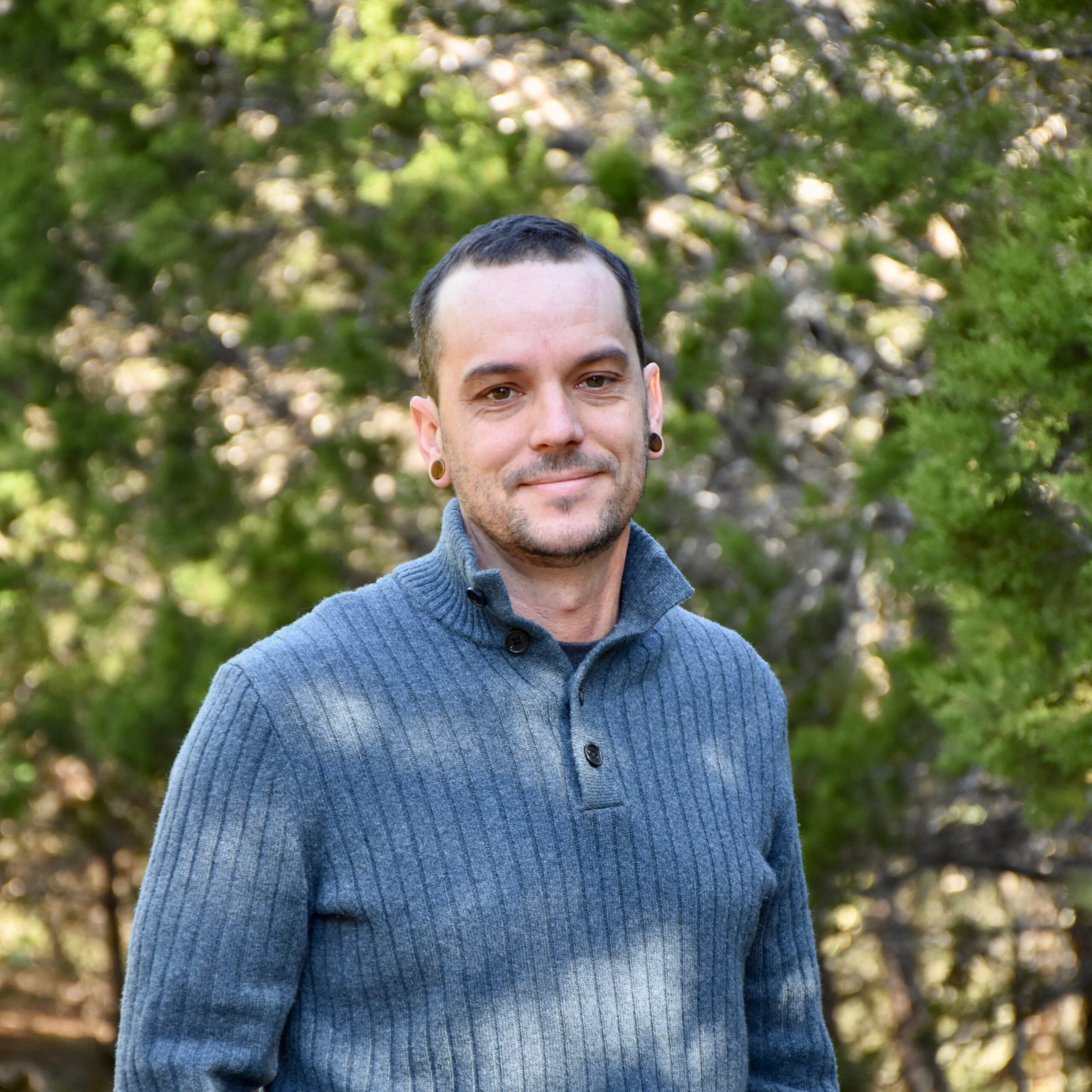
Reviewed by Chris Hudson, LPC
Founder & Executive Director – Lucent Recovery and Wellness, Austin, TX (2020–Present)
Leads clinical programs and develops innovative therapeutic approaches integrating experiential and creative therapies.
Board Member – Reklaimed, Austin, TX
Supports recovery-focused nonprofit initiatives fostering community and creative skill-building.
Clinical Leadership Roles – South Meadows Recovery, Inc.
Held leadership positions overseeing program development, clinical operations, and organizational management.
EDUCATION & CREDENTIALS
- M.A., Clinical Mental Health Counseling – Seminary of the Southwest (2021)
- B.A., Studio Art – Lewis & Clark College (2004)
- Licensed Professional Counselor (LPC), Texas
- Licensed Chemical Dependency Counselor (LCDC), Texas